Spoilers follow for both parts of the kidnapping case, its escape and solution, and the unresolved identity theories raised by its final scene.
Omura and the editors working with him kidnap Azusa Enomoto and Conan Edogawa because they fear a leak about an unreleased game. They mistake a conversation about Azusa’s weight for a warning that she cannot keep a secret. The apparent body parts in their hideout are props: no one is murdered in this case, and both captives are rescued.
Who Kidnapped Conan and Azusa? spans international episodes 1264–1265 (Japanese episodes 1204–1205), adapting Volume 106, Files 1126–1128. The two parts turn a familiar afternoon at Café Poirot into a frightening disappearance, then solve it through parallel investigations inside and outside the place of confinement.
Three customers and a disappearance behind a bus

Conan, Ran Mouri, Sonoko Suzuki and Masumi Sera are working on matchstick puzzles at Poirot when Sonoko accidentally opens a news report about an arrested serial killer. Azusa thinks she may have seen the man’s face before. That uncertainty makes the later horror imagery feel disturbingly connected to a real crime.
Three masked customers draw attention. One complains that the beef stew tastes like a dish from his usual restaurant, accusing Poirot of copying it; Tooru Amuro shows him the recipe and settles the complaint. Kanemaru keeps ordering coffee and lingering. Omura has a laptop open and asks Azusa to keep something secret. Their apparent colds make their masks unremarkable, but their behavior leaves several possible leads.
Amuro finds that the café is almost out of herb salt. The nearby shop has none, so he sends Azusa to a more distant store, and Conan accompanies her. On the way back, Conan notices that someone is following them. He calls Ran and asks for Amuro’s help.
Amuro and the three girls rush out and see Conan and Azusa across the road. A large bus passes between them. By the time it clears their view, the pair have vanished, despite Azusa calling out to Amuro. The disappearance is especially unsettling because help is already within sight.
The horror room and Conan’s escape
Azusa wakes in a windowless room with Conan beside her. Opening a small refrigerator reveals what looks like a head preserved in a jar; apparent bloodied fingers add to the terror. With the serial-killer report still in mind, she fears that they have fallen into the hands of someone connected to it.
Conan has been observing the situation since around the time Azusa opened the refrigerator. He hides one of her wireless earbuds in a kidnapper’s trouser hem. The captors have her phone, and the device-finding separation alert provides a way to tell when they split up. Once only one guard remains nearby, Conan draws him in with a cough and puts him to sleep with the Stun-Gun Wristwatch.
Recovering the phone does not immediately solve their problem: the signal is too weak to call for help. Conan then uses the matches to force the padlock open. The objects associated with an innocent café puzzle have become part of his attempt to get them out of confinement.
Messages on a captor’s phone contain the terms torutsume, hiraku and mama. Conan recognizes them as proofreading terminology. This points toward publishing work and gives him a concrete professional connection to investigate.
Azusa also notices that the supposed head looks like the man Conan has just put to sleep. Its effect comes from a photograph curved into a cylinder inside the jar, while the fingers are altered sausages. The windowless room is a photography studio, and its grisly contents are props used to frighten the captives into submission.
A sneeze and a reflected screen lead the others to the editors
Outside, Amuro, Sera, Ran and Sonoko reconstruct what happened using the customers’ behavior and the traces left at Poirot. An elderly woman pushing a pram supplies a useful observation: she heard a sneeze coming from a black car. The woman has a cat allergy herself. Her account helps narrow the search among the customers who appeared to have colds.
Sonoko’s photograph supplies another route into the case. A laptop screen is reflected in a picture frame within the image, and the Roman numeral III is visible. That detail connects the customers to information about an unreleased third installment of a horror game. Omura and the other kidnappers are editors working on its strategy guide.
The evidence fits together from two directions. Conan finds the language of editors on the inside, while the group outside discovers the game material those editors were handling. The studio props then explain the apparent link to a serial killer without requiring a murder to have taken place there.
Why the editors thought Azusa would leak their secret
The editors believe Azusa has seen confidential game information. They are already anxious about keeping it private until the permitted release time, and they misinterpret something Ran and Sonoko say about her.
The conversation concerns Azusa being light in a tug-of-war discussion: Ran and Sonoko mean her body weight. The Japanese word karui means “light,” but kuchi ga karui, literally “one’s mouth is light,” describes someone who cannot keep a secret. The editors understand the remark in that second sense. A comment about a physical game becomes, in their minds, evidence that she cannot be trusted with information.
They decide to keep her silent until the information can be released and abduct Conan along with her. Omura and his fellow editors eventually admit the mistake and apologize, and both victims are rescued. The motive explains why they acted, but it leaves the absurd disproportion of their response intact: a misunderstood remark has led to a real abduction and terrifying confinement.
Kanemaru’s interest in Poirot has a different explanation
Kanemaru’s lingering over coffee is suspicious at first, but his connection to the café explains his presence. He once acted as its manager while the regular owner was injured. He has come because he is concerned about Amuro and Azusa’s relationship; he is separate from the editors’ kidnapping scheme.
This detail gives Poirot a history beyond the current case. Someone who has helped run it has opinions about the people working there, and that ordinary curiosity becomes one more misleading impression during the investigation. Azusa’s familiar place in this small community also makes her disappearance feel more personal.
Sera’s attention to Amuro and the figures in the final scene
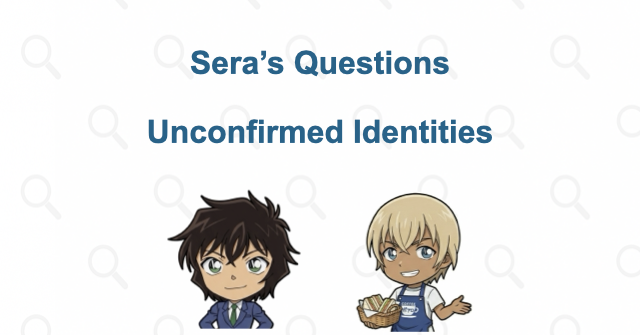
Amuro knows that Sera is Shuichi Akai’s sister. Sera, meanwhile, has an earlier connection to him through the encounter recalled in The Unfriendly Girls Band. She remembers a man alongside Akai and Hiromitsu Morofushi, known as Scotch, and Amuro resembles the man she remembers calling Morofushi Scotch. Her incomplete view of him means that her recognition remains uncertain.
Sera still believes that Akai is dead at this point. Her probing looks at Amuro may reflect a suspicion that he knows something about her brother, but the scene does not confirm that she has established Amuro’s identity or learned the truth about Akai. Amuro’s own interest in Conan also remains part of the background tension.
The elderly witness and the infant in her pram return in the epilogue. The infant is depicted in shadow, and the repeated appearance invites speculation. One theory identifies the infant as a shrunken Renya Karasuma; another proposes that the woman is Vermouth. Both proposed identities remain unconfirmed here.
Their role in the solved case is narrower and clear: the woman provides the sneeze testimony. Their return may be a clue to a larger story, but it does not establish those proposed identities. Keeping that unresolved thread separate preserves the difference between a completed kidnapping mystery and an unanswered character question.
Why the case’s change in tone works
The opening works because Poirot feels safe: friends share puzzles while Amuro and Azusa go about their jobs. The bus interrupts that ordinary scene for only a moment, yet the next stage puts Azusa in a room designed to terrify her. Her panic gives the artificial horror real emotional weight.
Learning that the apparent body parts are props brings relief and an almost comic sense of disbelief at the editors’ reasoning. It does not erase what Conan and Azusa have endured. The contrast between their captors’ trivial misunderstanding and the fear it causes gives the solution its uneasy edge.
The rescue is satisfying because both sides contribute. Conan acts resourcefully with the objects available to him, while Amuro, Sera, Ran and Sonoko make sense of a witness statement and a photograph. Ran and Sonoko help produce the answer instead of merely waiting for news, and the two investigations finally meet at the same explanation.





Comments