Spoiler warning: Major spoilers for Matsuda’s story and relationships in the manga through File 1166, plus the anime and films discussed below.
Why did Matsuda stay on the Ferris wheel?
Who was responsible for the bombing?
Jinpei Matsuda stayed on the Ferris wheel to learn where the bomber had hidden another explosive. He could disable the gondola’s bomb, but the clue would appear only three seconds before it detonated. He waited, sent the information to Miwako Sato, and died in the explosion.
The same unnamed serial bomber had killed his childhood friend Kenji Hagiwara four years earlier. The criminal was eventually arrested, but Matsuda did not live to finish that pursuit himself. That unfinished promise is central to the tragedy, alongside the feelings he finally admitted to Sato.
Matsuda was a Tokyo Metropolitan Police Department bomb-disposal specialist who spent only about a week in the First Investigation Division. This guide follows his background, final decision, friendships, and first love, then explains what later flashbacks add. Movie events are treated separately from manga evidence.
Who Is Jinpei Matsuda? His Background and Profile
Matsuda originally served in the explosive ordnance disposal unit within the Tokyo Metropolitan Police Department's security and riot-police organization. He later moved to the First Investigation Division's Violent Crimes Unit 3 and worked with Miwako Sato.
His time in the division lasted only about a week. That short interval nevertheless leaves a lasting impression through his technical skill, his attitude toward the job, and the final message he sends Sato.
What makes that brief appearance so memorable is how much of it carries forward. Sato remembers his final words, Rei uses knowledge he passed on, and Chihaya’s recollections reveal sides of him the bombing case could never show. His influence remains active even though his life has ended.
From Bomb Disposal to the First Investigation Division
After police-academy training, Matsuda joined the bomb-disposal unit. His ability to understand machinery, dismantle it, and put it back together made the work a natural fit for his talents.
Kenji Hagiwara, his close friend since elementary school, joined the same unit. Kenji died in a bombing seven years before the present-day story; the anime chronology associates that death with November 7.
Matsuda sought a transfer to criminal investigation so that he could pursue the bomber responsible. Three years before the present, he finally joined the First Investigation Division and began working with Sato.
Only about a week later, he died while responding to another bomb planted by the same criminal. The move that seemed to offer a new chance to pursue the case instead became the last chapter of his career.
The transfer should have marked a beginning: a chance to pursue Kenji’s killer, learn a new job, and get to know Sato. Instead, all three possibilities are interrupted almost as soon as they open up. That is why the week matters as more than a date on his career history.
His Police Rank and Japanese Voice Actor
Nobutoshi Canna voices Matsuda in the Japanese anime. His exact police rank remains unspecified.
A department assignment describes his work, not his rank. He can be identified accurately as a detective and former bomb-disposal specialist without giving him a rank the covered material does not establish.
His Father's Wrongful Arrest and His Anger at the Police
Matsuda's father, Jotaro Matsuda, was a professional boxer. He was wrongly arrested as a suspect shortly before an important match, losing the chance to compete and a major opportunity in his career.
Afterward, his behavior changed and he began drinking heavily. For Jinpei, the arrest was not an abstract institutional mistake: it had altered his father's life and the life of the family.
That history explains the hostility he brings toward the police, including during his academy years. Becoming an officer does not initially mean that he admires the institution or has put his anger behind him.
His anger over his father is explicit. The idea that he also joined to examine the police from within is a possible reading of that contradiction, rather than a complete motive the story spells out. We should leave room for that distinction instead of making his career sound like a neatly resolved conversion.
His final choice gives the contradiction its force. Matsuda can resent what the police did to his family and still accept an officer’s responsibility to protect strangers. The Ferris wheel does not require us to imagine that all his anger disappeared first.
The In-Story Reason for His Sunglasses Is Unknown
No personal reason for Matsuda’s sunglasses is established in the material covered here. It does not identify an eye condition or another medical explanation.
His appearance invites comparisons with actor Yusaku Matsuda, but that design theory is separate from an in-story explanation. A visual resemblance cannot tell us why the fictional detective chooses to wear the glasses.
His academy-era appearance without the familiar sunglasses creates a different impression from the more guarded detective Sato meets. The visual contrast reinforces the passage between those phases of his life.
The glasses also sharpen the difference between his intimidating exterior and moments of consideration. They communicate character effectively even without a disclosed personal explanation.
A Gifted Mechanic Who Understands Guns, Vehicles, and Bombs
Matsuda understands mechanical structures quickly enough to dismantle and reassemble them. At the academy, he demonstrates that talent by rapidly taking apart Rei’s handgun. His interests extend to vehicles, Chihaya’s phone, and, eventually, the bombs he handles professionally.
His fascination with machinery predates police work. Chihaya remembers him taking apart her phone, and his long association with the Hagiwara family's repair shop provides a natural setting for that curiosity.
Growing up around Kenji and the shop may have contributed to his practical knowledge, although the story does not give a complete account of how every skill was acquired.
His expertise is important to understanding his death. He does not remain on the Ferris wheel because he is unable to work out the device. He understands the trap and the reason dismantling it immediately would prevent him obtaining information about another bomb.
That makes the trap especially cruel: the ability that would normally save him lets him understand exactly what the bomber is demanding. His skill is intact. The criminal has arranged matters so that using it immediately would cost the police the warning they need elsewhere.
He Injured His Hand While Saving Someone in High School
Matsuda’s willingness to put another person’s safety first has an earlier, concrete example. In his first year of high school, he stopped Shinobu Oe from taking his own life by grabbing the blade of a knife with his bare hand.
Matsuda injured his hand stopping him and could no longer take part in the national inter-high-school boxing competition. The episode connects his willingness to help with a real personal cost.
With a former professional boxer for a father and an inter-high-school tournament ahead, boxing clearly mattered to him. The injured hand and missed competition make the cost of helping Oe concrete.
The flashback reveals both his compassion and the risks he takes. His instinct is to help first, even when doing so costs him an opportunity he has worked toward.
The two incidents echo without being identical. As a student he loses an opportunity to compete; on the Ferris wheel he loses his life. Seeing the earlier memory makes the final decision feel less like a sudden heroic transformation and more like the most devastating expression of a longstanding instinct.
Why Did Matsuda Die? The Ferris Wheel Bombing
Matsuda died in the explosion of a bomb planted in a Ferris wheel gondola three years before the present-day story. In the anime chronology, his death is dated November 7.
He had the expertise to disable the device. The reason he stayed was that the bomber tied information about another bomb's location to a clue that would appear only three seconds before the explosion.
His death is therefore not explained by a simple technical failure. It follows from a trap designed to make a rescuer choose between leaving immediately and obtaining information needed to save other people.
The Bomber Who Killed Kenji Returned
The same serial bomber was responsible for the events that killed both Kenji and Matsuda. Kenji's death occurred seven years before the present, four years before Matsuda's.
During that interval, Matsuda continued pursuing the case. When another warning arrived three years before the present, the unresolved investigation became an immediate emergency again.
The warning referred to events at noon and at 2 p.m., using casual language about fireworks to threaten explosions. The important point is that the criminal had prepared more than a single isolated device.
The arrangement was intended to torment the police as well as endanger the public. Matsuda faced both the criminal associated with his friend's death and his responsibility to protect the people now at risk.
He finally has another chance to confront the criminal he has pursued for years, yet the people at risk cannot wait for his revenge. The case puts his personal promise and his public responsibility in the same place, then makes him choose what takes priority.
Matsuda Could Have Disabled the Gondola's Bomb
Matsuda entered the gondola alone and assessed the device as a trained specialist. He had time and technical ability to deal with the immediate bomb under ordinary circumstances.
The obstacle was the bomber's additional condition: disabling the device would remove the opportunity to learn where another explosive had been placed.
This is why describing the death as a failed attempt at defusal is misleading. The decisive issue was not that Matsuda misunderstood the mechanism or could not complete the work.
He understood the relationship between the countdown and the information he needed. The criminal had deliberately turned a specialist's rescue task into a cruel information trap.
His calm makes the scene more unsettling. He understands the device well enough to recognize why he cannot obtain the clue and then escape. Concentrating on the message is a response to that knowledge, rather than evidence that he has overlooked the danger.
He Waited for the Clue to the Other Bomb
The clue to the second bomb's location was set to appear with three seconds remaining. Waiting for it meant that there would no longer be time for Matsuda to disable the gondola's device and escape.
He stayed in order to send the location to the police. The decision placed the people threatened by the other bomb ahead of his own chance to survive.
The scene does not represent Matsuda finally achieving revenge. The bomber was not yet under arrest, and the investigation that had motivated his transfer remained unfinished.
He also lost whatever future might have developed with Sato and his new colleagues. The tragedy includes those ordinary possibilities as well as the unfinished pursuit of the criminal.
There is a painful contrast with his academy-era hostility to the police. The young man furious at the institution becomes the officer who puts strangers first when it costs everything. That reading follows his actions; it does not tell us that he privately forgave the police or stopped grieving Kenji.
His Final Message Told Sato How He Felt
After seeing the clue, Matsuda sent Sato the information needed to locate the other bomb. He also added a brief, understated admission that he had been rather fond of her.
The message establishes his affection. Their time working together had lasted only about a week, yet she was the person he chose to address in those final moments.
The restrained phrasing suits a man who usually hides tenderness behind a rough manner. He does not suddenly sound like a different person; the emotion appears through the familiar understatement.
It is also a confession to which he cannot hear a reply. That makes the message different from the start of an ordinary romance, even though the feeling itself is clear.
The practical warning and the understated confession arrive in the same message. Sato can act on one, but cannot answer the other. That imbalance gives the scene its lasting hurt: the rescue continues, while the conversation between them ends before it can begin.
He Died in the Explosion; Later Appearances Are Memories
Matsuda dies in the Ferris wheel explosion. November 7 is the date used in the anime chronology; the manga and anime do not share every calendar detail.
The material covered through File 1166 does not overturn his death. Later appearances primarily show his school years, police-academy days, or memories held by Sato, Rei, and Chihaya.
More screen time does not mean that he secretly survived. It means that the story continues to reveal experiences he had before the fatal incident.
His personal timeline ends, while the effect of his words and knowledge continues. That distinction allows him to remain important in present-day stories without undoing the loss.
Who Was the Bomber Responsible for Matsuda and Kenji's Deaths?
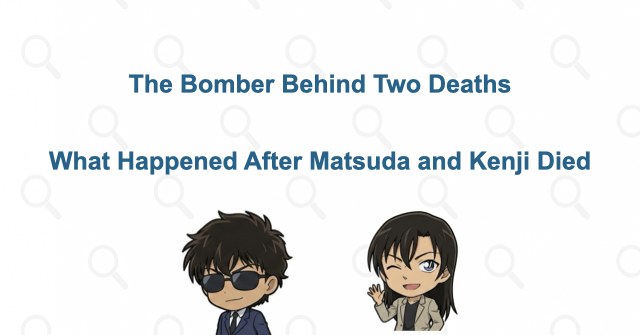
The same serial bomber caused the incidents that killed Kenji Hagiwara and Jinpei Matsuda. The criminal bears a grudge against the police and returns to similar threats over a period of years.
The bomber's real name is not revealed. His victims include Kenji Hagiwara and Matsuda; Kenji's older sister Chihaya survives and works for the Kanagawa Prefectural Police.
The Serial Bomber's Real Name Is Unrevealed
The serial bomber has no revealed real name in the covered material. Lettered labels sometimes used in explanations are convenient identifiers, not a personal name supplied by the story.
His lack of a revealed name does not make him a minor influence. His crimes kill two academy friends, traumatize Sato, and later place Takagi and Conan in another version of the same danger.
The consequences connect the bomb-disposal unit, the First Investigation Division, and the present-day cast. What initially looks like a single case turns out to shape years of relationships.
The case’s lasting force comes from that chain of consequences. The killer need not have an elaborate disclosed biography to leave damage across two generations of police work and across several of the series’ closest friendships.
One Criminal, Two Fatal Bombing Incidents
Kenji was working on a device seven years before the present when a timer that had stopped began running again. He was caught in the resulting explosion and died in the line of duty.
Four years later, the same criminal sent another threat. Matsuda responded to the Ferris wheel device and remained to obtain information about the additional bomb.
The mechanisms and locations were not identical, but the deaths belong to the same chain of crimes. It is more accurate to emphasize the same perpetrator than to claim that every detail of the two traps matched.
Kenji's death explains Matsuda's continued pursuit and his request for a transfer. The later repetition is especially cruel because it claims the friend who had spent years trying to finish that investigation.
Conan and the Police Eventually Secured His Arrest
The bomber was arrested three years after Matsuda's death. Another threat brought Takagi, Sato, Inspector Megure, and Conan into the investigation.
Conan played a central role in understanding the new device and decoding the criminal's clues. The resolution, however, was not the achievement of one person acting in isolation.
Takagi, Sato, Megure, and their colleagues connected the current danger with the earlier cases and pursued the bomber. Their efforts brought an end to the investigation Matsuda had not lived to complete.
Matsuda never placed the handcuffs on the criminal himself. His final warning and the memories carried by the others still mattered to how the later case unfolded.
The arrest is satisfying because the survivors finish the work Matsuda could not. It is also bitter: stopping the criminal settles the investigation, but does not restore the friends or the week with Sato that was cut short.
The Bride of Halloween Brings the Bomber Back Through Plamya's Plot
The arrested bomber appears again in the movie The Bride of Halloween. His escape from prison becomes part of a new incident involving Rei Furuya and Japanese public security.
The escape is not simply a story of the criminal regaining independence. He becomes entangled in and used by Plamya's larger plan.
This is a movie-specific continuation of the earlier case. It connects the loss of Matsuda to a present-day danger faced by Rei, the surviving member of their academy group.
Matsuda cannot confront the threat himself. The film instead shows how an unresolved consequence of the past reaches someone who remembers him, linking personal history to the new investigation.
Matsuda and the Police-Academy Group
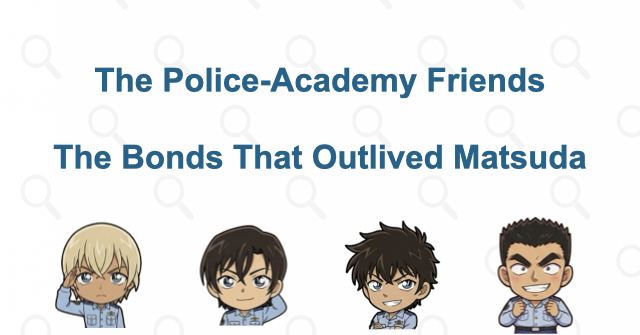
Matsuda trained with Rei Furuya, Kenji Hagiwara, Wataru Date, and Hiromitsu Morofushi. Their friendship was not effortless from the beginning.
His hostility toward the police and his blunt manner could make him look like a troublemaker. Yet his technical knowledge and quick action repeatedly made him someone the others could depend on.
Their bond develops through disagreement as well as cooperation. Different strengths allow them to support one another when a dangerous situation demands more than one person's ability.
Kenji Hagiwara: His Close Friend Since Elementary School
Kenji was Matsuda's friend long before they entered the academy. Matsuda spent time around the Hagiwara family's vehicle-repair business, and both boys developed strong interests in cars and machinery.
They later join the same bomb-disposal unit. Their unguarded conversation has the ease of years spent together: Kenji can look past Matsuda’s rough manner, while Matsuda recognizes the judgment behind Kenji’s lighter talk. That familiarity makes the loss more specific than simply losing another colleague.
Losing Kenji therefore changes Matsuda's adult life, not just his work assignment. He continues pursuing the bomber and carries a sense of unfinished responsibility toward his friend.
Revenge is part of the emotional context, but their history is broader than that. The loss remains visible in Matsuda's language, priorities, and inability to treat the case as simply another closed chapter.
Rei Furuya: From Fighting to Mutual Respect
Matsuda and Rei clash soon after entering the academy. Both are stubborn, and Matsuda's resentment of the police collides with Rei's commitment to becoming an officer.
Their physical fight is not the whole relationship. Matsuda comes to recognize Rei's boxing ability, while Rei respects Matsuda's unusual mechanical knowledge.
Matsuda's understanding of firearms and bomb disposal later becomes part of what Rei carries into his own work. Their connection includes the transfer of knowledge as well as shared danger.
Calling them simply agreeable friends would miss the way respect grows through friction. They can argue and still trust the other's competence when it matters.
Those quarrels become unexpectedly warm when seen from Rei’s present. They belong to a time when all five friends could still challenge and rely on one another. The later losses give the rough edges of their early friendship a value that a uniformly harmonious group would not have.
Wataru Date and Hiromitsu Morofushi: Reliable Friends Despite the Friction
Date and Hiromitsu are the other members of the academy group. Date's strong leadership helps hold together personalities as forceful as Matsuda and Rei.
Hiromitsu's composure and the unresolved events of his childhood bring different challenges into their shared story. Matsuda and the others help him confront those circumstances.
Matsuda may speak roughly, but he is quick to respond when a friend is endangered. His practical understanding often becomes a vital part of the group's response.
They work well together not because they are alike, but because their abilities differ. Matsuda's mechanical insight is one indispensable piece of that combination.
His Knowledge Still Shapes Rei's Decisions After His Death
In The Darkest Nightmare, Rei remembers Matsuda’s advice while working on a bomb. The memory helps him stay calm and apply what he learned, giving their friendship an immediate practical consequence in a movie-specific scene.
Of the five academy friends, Rei alone is alive in the present-day story. Each loss remains with him differently, and Matsuda's legacy has a particularly practical connection to dangerous technical work.
The remembered words affect what Rei does with his hands and how he judges the situation. A past friendship becomes part of a present solution.
This does not undo Matsuda's death. It shows how teaching and trust can continue to matter after the person who supplied them is gone.
Matsuda's Relationships with Miwako Sato and Chihaya Hagiwara
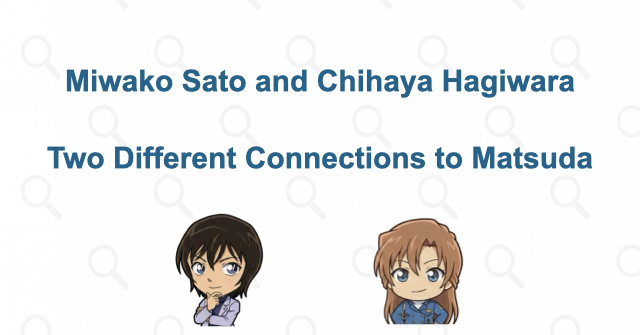
Chihaya was Matsuda's first love, while Sato was the colleague he met shortly before his death and addressed in his final message. These relationships belong to different periods of his life.
There is no need to rank them as though only one feeling could have been genuine. The story gives each woman a different connection to the person Matsuda was at that time.
Miwako Sato: The Week They Worked Together
Matsuda and Sato worked together for about a week between his transfer and his death. His initial manner was brusque, and much of his attention remained fixed on the bomber.
Their conversations nevertheless moved beyond routine work. When Sato spoke about the handcuffs left by her father, Matsuda did not tell her that remembering him was a weakness.
His advice reflects the difference between moving forward and forgetting someone. Matsuda himself was still living with Kenji's death, so the subject was not distant from his own experience.
A week is a short time to know someone, but the conversation about her father’s handcuffs reaches beyond routine partnership. Matsuda takes her grief seriously. That depth helps explain why the final message stays with Sato, even though they never become an established dating couple.
The Final Message Was a Confession, Not the Start of Dating
Matsuda clearly communicated romantic affection in his final message. The story does not show him and Sato becoming an official couple before his death.
Sato is deeply affected by him, but they do not exchange mutual confessions and begin dating. His words arrive when there is no future conversation available to them.
Sato's later relationship with Wataru Takagi does not erase Matsuda's memory. Remembering someone who died and allowing a new relationship to develop can coexist, echoing the distinction Matsuda himself made about her father.
Chihaya Hagiwara: His First Love
Chihaya is Kenji's older sister, and Matsuda knew her through his long association with the Hagiwara family. His memories with her include the incident in which he took apart her phone.
Later school-day scenes show Matsuda, Kenji, and Chihaya together. Matsuda did not regard her merely as his friend's sister; his feelings were romantic.
Chihaya's feelings are less explicitly defined. She remembers him strongly, but that does not establish that she reciprocated his love or that they dated.
Her memories allow more than one reading: affection for Matsuda himself, the youth she shared with him and Kenji, and the grief of losing them both. Those feelings can overlap. None by itself establishes that she once dated him.
The Ring at the Festival Made His Feelings Plain
The ring-related story spanning Volumes 108-109 gives a more concrete glimpse of Matsuda's first love. At a festival shooting stall, he offers to win the ring Chihaya wants and links success to the idea of her becoming his wife.
His interest includes the language of dates and marriage, even when expressed through youthful teasing. That makes his feelings more explicit than silently admiring her from a distance.
The scene makes Matsuda's feelings clear, while Chihaya's romantic response remains unconfirmed.
The scene is sweet because the interest is so open, and painful because the audience knows that both boys are gone. Chihaya can remember the three of them at the festival, but she cannot return to that ordinary, bright moment with them.
His First Love and His Feelings for Sato Do Not Contradict Each Other
Matsuda's feelings for Chihaya belong to his earlier years. His attraction to Sato develops after he becomes an officer and spends that final week in the First Investigation Division.
The story does not fully explain when or how his feelings for Chihaya changed. Kenji’s death may have altered the relationship, but it is not established as the sole cause. Another possibility is simply that feelings changed over time; the material does not choose a complete explanation for us.
Nor can we know whether Matsuda and Sato would have dated had he survived. That possible future was never given the opportunity to become part of the story.
What is established is that he cared for two people at different points in his life. Treating one as proof that the other was false would create a contradiction the material does not require.
Which Episodes and Manga Volumes Tell Matsuda's Story?
The main account of Matsuda's death is The Trembling Police Headquarters: 12 Million Hostages. It is Japanese Episode 304, corresponding to international Episodes 326-329, and adapts material from Volumes 36-37.
His wider character emerges through the police-academy story, Chihaya-related cases, and the ring memories in Volumes 108-109. Those later accounts add to his past rather than changing the outcome of the bombing.
International Episodes 326-329: The Trembling Police Headquarters
The Trembling Police Headquarters: 12 Million Hostages is the key anime story for understanding why Matsuda died. Japanese Episode 304 is presented as international Episodes 326-329 in the numbering used here.
In the present-day investigation, Takagi, Sato, and Conan pursue the serial bomber. Flashbacks explain Matsuda's response to the Ferris wheel device three years earlier.
The story connects Kenji's death, Matsuda's last message, and the clue that appeared with three seconds remaining. Takagi's current danger also brings Sato's earlier loss painfully close again.
The resolution offers relief without undoing Sato’s loss. Takagi’s present danger brings the earlier bombing close again, so catching the criminal matters both as detective work and as the continuation of an unfinished personal history.
Volumes 36-37: The Five-Chapter Bombing Story
The manga sequence runs from Volume 36, chapter 8, through Volume 37, chapter 1, corresponding to overall Files 369-373. It consists of five chapters rather than a separate, self-contained Matsuda biography.
The investigation moves between the present case and Sato's memories. Matsuda initially appears as a figure from her past, then becomes increasingly central to understanding the current threat.
Each chapter adds another connection between the earlier bombing and what Conan and the police are confronting now. The structure lets readers feel how an old loss continues to shape an active case.
The satisfaction comes from watching the past and present fit together; the sorrow comes from knowing that those connections can never bring Matsuda back. His information can still help solve a case. Sato cannot turn it into another conversation with him.
International Episode 1086: Police Academy Arc, CASE. Jinpei Matsuda
Police Academy Arc Wild Police Story CASE. Jinpei Matsuda is international Episode 1086 (Japanese Episode 1029). It is the essential reference for his life before the First Investigation Division.
The story explores his father's wrongful arrest, his resentment of the police, his fight with Rei, and his remarkable technical ability with machinery and firearms.
The detective introduced in Sato's memories already seems fully formed. The academy story instead shows a young man whose anger is being challenged by relationships with his classmates.
He is not uniformly gentle or easy to get along with. Even at this stage, however, he cannot comfortably ignore a friend in danger, and his abilities repeatedly become useful to others.
Volumes 101-102: Earlier Memories with Chihaya
Chihaya-related stories reveal more of Matsuda's younger years. Volume 101's introduction of Chihaya includes the memory of his interest in her phone and his familiarity with the Hagiwara household.
Volume 102's matchmaking-party case adds the high-school incident involving Shinobu Oe. Matsuda's intervention saved Oe, but his injured hand cost him the chance to compete in the inter-high-school boxing tournament.
These memories show qualities that the death scene alone cannot explain: curiosity, youthful boldness, and a tendency to act when another person is in immediate danger.
They also make it clear that his concern for others did not first appear at the Ferris wheel. The later tragedy develops an existing part of his personality rather than introducing it only at the end.
Volumes 108-109: The Ring Memories and His First Love
The ring-related material runs from Volume 108, chapter 11, through Volume 109, chapter 2, or overall Files 1154-1156. It revisits Matsuda, Kenji, and Chihaya in their high-school years.
Matsuda's attempt to win the ring and his wish to spend time with Chihaya make his romantic interest more concrete. The scenes add youthful immediacy to a relationship already remembered as his first love.
The Japanese publication schedule announced as of September 2, 2026, listed Volume 109 for October 16, 2026. The chapters had already been serialized in the magazine as Files 1154-1156; the collected-volume schedule was a separate milestone.
These ring memories are discussed here as manga chapters, Files 1154-1156. They had not been adapted in the anime as of September 2, 2026.
The romance remains asymmetrical in what is explicitly known. Matsuda's feelings are clear; Chihaya's reciprocal romantic feelings are not confirmed.
Matsuda in the Movies: What the Flashbacks Add
Different films emphasize different parts of Matsuda's legacy. The Darkest Nightmare focuses on knowledge passed to Rei, The Bride of Halloween on the academy friends and his final days, and Fallen Angel of the Highway on his connection with Chihaya after Kenji's death.
These movie-only portrayals deepen the character without bringing him back to life. Each new memory increases our understanding of what the surviving characters lost.
The Darkest Nightmare: Advice Rei Remembers During Bomb Disposal
In The Darkest Nightmare, Rei faces a bomb on a Ferris wheel and recalls Matsuda's advice about staying calm rather than letting panic become another trap.
The memory connects practical instruction with a way of thinking under pressure. Matsuda taught more than a mechanical procedure; he helped shape how Rei approaches a dangerous task.
The Ferris wheel setting makes the memory especially affecting. It recalls the place where Matsuda died, yet here his teaching helps Rei continue the work. The parallel is emotional and thematic, rather than a claim that the devices or incidents are the same.
A short flashback thus changes the meaning of the present action. Matsuda is absent from the emergency, but the knowledge he gave Rei is one of the resources Rei can still use. The film makes that inheritance visible through bomb disposal itself.
The Bride of Halloween: The Day Before His Death
The Bride of Halloween includes a flashback to events on the day before Matsuda's fatal bombing. Matsuda, Rei, Date, and Hiromitsu encounter a case connected to Plamya.
Kenji is already dead at that point, yet the surviving four still carry the bonds of all five academy friends. Their conversation and coordination make that shared history tangible.
That is the flashback’s bitter advantage: only the audience knows this is Matsuda’s last day. The jokes and coordinated action can feel exhilarating while an ordinary exchange acquires the weight of a farewell the characters are not yet making.
The current-day escape of the serial bomber also connects this past to Rei's new danger. The film uses Matsuda's history as part of its present case rather than as a detached memorial sequence.
Fallen Angel of the Highway: Matsuda After Kenji's Death
The 2026 film Fallen Angel of the Highway shows Matsuda and Kenji through memories. One particularly significant scene has Matsuda telling Chihaya that her younger brother has died.
Matsuda has just lost his own closest friend. He must nevertheless face Kenji's sister, who was also his first love, and give her the devastating news.
Roughly four years separate Kenji's death from Matsuda's. This movie scene adds emotional detail to a period that has otherwise remained largely out of view.
His usual competence cannot make this conversation easy. He is telling his best friend’s sister that her brother is dead while carrying the same loss himself. The film gives the four-year gap a concrete human encounter, while leaving much of their relationship during those years unshown.
Their Remembered Words Support Chihaya in the Present
In the film, memories of Matsuda and Kenji help Chihaya face present danger. The two men do not miraculously return; their remembered words remain part of her strength.
That pattern resembles Rei recalling Matsuda's advice in The Darkest Nightmare. Different people carry different parts of the same person's influence.
Rei retains technical knowledge and a reminder to stay calm, while Chihaya draws on words and experiences from their shared past. The memories matter because they affect what the living characters do now.
The film thus uses flashbacks as more than nostalgia. They become a link between past relationships and present decisions without overturning either death.
Memorable Lines and Scenes That Capture Matsuda
Matsuda's best-known scenes combine professional confidence, loyalty to people who have died, and a tendency to push forward. His words can sound casual even when the circumstances give them considerable weight.
Reassuring Sato Before Entering the Gondola
Before boarding the gondola, Matsuda tells Sato to leave the dangerous work to a professional. He goes alone rather than bringing her into the immediate risk.
His confidence comes from real experience in bomb disposal. At that moment, he understands himself to be the person best equipped to handle the device.
Knowing how the scene ends changes the effect of that reassurance. What initially sounds like a casual display of competence becomes a memory Sato will have to carry.
The line captures both his reliability and the distance between what he can control technically and the larger trap the bomber has prepared.
Telling Sato She Does Not Have to Forget Her Father
Sato keeps the handcuffs associated with her father, who died in the line of duty. Matsuda tells her that remembering him and moving forward are not mutually exclusive.
He does not treat grief as something that must be erased to allow a future. His own continuing attachment to Kenji gives that view a personal context.
After Matsuda's death, the same idea applies to the people remembering him. Sato, Rei, and Chihaya can continue their lives while retaining what he meant to them.
The scene's importance lies in that distinction, not in an instruction to remain trapped in the past. Memory can be carried forward rather than simply discarded.
Thinking of the Promise He Could Not Finish
As the explosion approaches, Matsuda thinks of Kenji and the promise he will not finish. The thought trails off. That unfinished phrasing matters: the criminal he meant to arrest is still free, and the warning he chooses to send will leave other people to carry the investigation forward.
He wanted to catch the bomber responsible for his friend's death. Remaining to warn the police about the other device means he will not be the person who finally makes the arrest.
One possible emotional reading is that he believes Kenji would put the endangered people first too. The scene does not state that as Matsuda’s complete inner reasoning. What it does show is that the wish to fulfill his promise never becomes an excuse to abandon those people.
His concern for those at risk takes priority over personally completing the pursuit. The later investigation gives others the opportunity to finish the work he leaves behind.
The Accelerator Image: Resolve and Its Cost
In the police-academy story, Matsuda describes himself through the image of a person with an accelerator and no brake. The remark fits his tendency to pursue an objective without easily backing away.
His anger over his father, his investigation after Kenji's death, and his quick intervention when someone is endangered all show that forward momentum in different forms.
Having only an accelerator is not the same as having no judgment. Matsuda often understands the danger; the image points to his difficulty applying a brake when another person’s life or an unfinished duty is in front of him. His own safety becomes the thing he is prepared to spend.
That quality is both compelling and risky. The image captures a strength and a vulnerability rather than presenting recklessness as an uncomplicated virtue.
What the Later Manga, Anime, and Films Add
These later stories shift the focus from Matsuda’s final decision to the life his friends remember.
The 2026 Remasters Revisit Chihaya-Related Memories
The Chihaya introduction and matchmaking-party stories were rebroadcast in digitally remastered form in February 2026. Both revisit memories that broaden Matsuda's characterization.
One emphasizes his mechanical curiosity and his familiar relationship with the Hagiwara family. The other recalls the injury he sustained while stopping Shinobu Oe from harming himself.
Taken together, those memories make him feel less like a character defined solely by a heroic final scene and more like someone whose strengths and risks had developed over time.
Fallen Angel of the Highway Adds to the Four-Year Gap
The encounter after Kenji’s death is one glimpse of the roughly four-year interval before Matsuda’s own death.
That scene cannot tell us how often they met afterward or how much of his grief he shared with her. It establishes that he faced her at this terrible moment; it does not establish a sustained pattern of avoidance, intimacy, or romance across the next four years.
Its importance is more focused: at a devastating moment, he did not simply disappear from her life. He faced the duty of telling her what had happened while carrying his own loss.
The open questions make the encounter more affecting rather than less. We can see the difficult duty he did carry out while still recognizing how much of those years remains unshown.
Conclusion
Jinpei Matsuda was a mechanically gifted officer who moved from bomb disposal to the First Investigation Division. His father's wrongful arrest shaped his anger at the police, but his own work ultimately centered on protecting people.
Nobutoshi Canna voices him in Japanese, while his precise police rank remains unspecified. His closest academy friends were Rei Furuya, Kenji Hagiwara, Wataru Date, and Hiromitsu Morofushi.
His Final Decision Was About the People Threatened by the Other Bomb
Kenji died seven years before the present-day story, and Matsuda died four years later while pursuing the same bomber. The anime chronology uses November 7 for the fatal incidents.
Matsuda could have dealt with the immediate gondola device, but he stayed to obtain the clue to the other bomb. He sent that information to Sato along with his final admission of affection.
The decision did not finish his investigation or create a future with Sato. It left both unfinished while giving the police information needed to protect others.
Chihaya Was His First Love; Sato Received His Final Confession
Matsuda's feelings for Chihaya and Sato belong to different stages of his life. His first love is made especially vivid by the later ring memories, while his affection for Sato is explicit in the final message.
Chihaya's reciprocal romantic feelings are unconfirmed, and Sato and Matsuda do not become an established dating couple. Neither uncertainty makes his own feelings unreal.
The serial bomber, whose real name is unrevealed, is eventually arrested through the work of Conan and the police three years after Matsuda's death. The resolution belongs to those who continue the case.
The Movies Show Different Parts of His Legacy
The Darkest Nightmare shows Rei drawing on Matsuda's advice. The Bride of Halloween revisits the academy friends shortly before Matsuda's death, and Fallen Angel of the Highway adds the scene in which he tells Chihaya about Kenji.
These movie-only memories should be kept separate from manga evidence, but all develop the same broad idea: the people who survive carry parts of Matsuda with them.
None of the material covered here overturns his death. The growing number of flashbacks deepens the loss rather than undoing it.
His Words and Skills Continue Through Other People
Matsuda's rough manner coexists with an instinct to help, and his technical confidence coexists with a dangerous willingness to put himself last. Those contrasts make him more than a flawless memorial figure.
Sato carries his final words, Chihaya remembers their youth, and Rei retains knowledge that can still help in a crisis. His life ends, but its consequences remain active in theirs.
The continuing flashbacks deepen the loss instead of cancelling it. Matsuda stays present through what other people remember and use: words, knowledge, and moments they cannot repeat. That combination of continuing influence and irreversible absence is what makes his short initial story linger.
Further reading (contains spoilers): Chihaya Hagiwara and Jugo Yokomizo's relationship and File 1156 review.

Comments