MENU

Why Kuroda Calls Muga Iori Sakakibara: Their Public Security Past | Case Closed

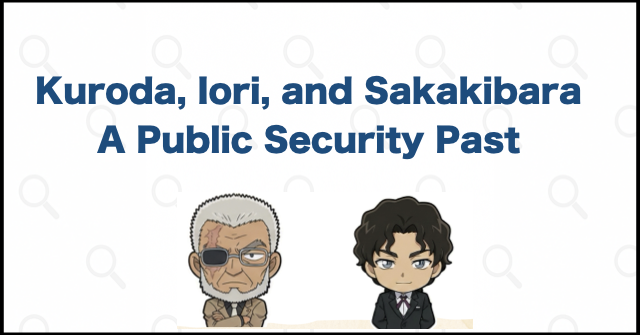
Why Kuroda Calls Muga Iori Sakakibara: Their Public Security Past

What kind of relationship do Hyoue Kuroda and Muga Iori share?

And why does Kuroda call Iori “Sakakibara”?

On the surface, the two men occupy very different worlds. Kuroda is a senior officer in the First Division of the Tokyo Metropolitan Police Department, while Iori serves as Momiji Ooka’s butler. Volume 102, however, brings a shared Public Security Bureau past into view.

Kuroda was Iori’s direct superior when Iori served in the Public Security Bureau.

The name “Sakakibara” was an alias Iori used at an old undercover assignment. Kuroda lets that operational name slip out from habit, and Iori immediately asks him not to use it.

This article examines their exchange, the meaning of the alias, and what the scene does and does not establish about their Public Security Bureau connection. It contains spoilers for the relevant stories.

TOC

Hyoue Kuroda and Muga Iori’s Former Public Security Bureau Connection

Hyoue Kuroda and Muga Iori's Former Public Security Bureau Connection

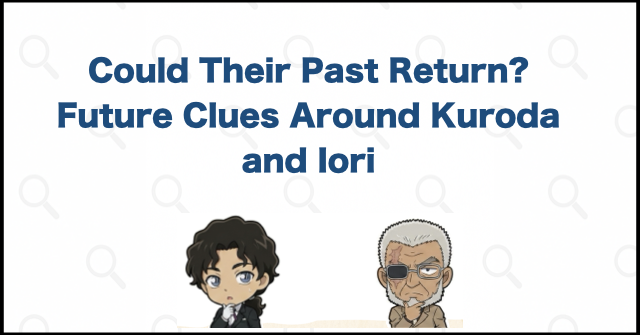
Kuroda and Iori were formerly superior and subordinate in the Public Security Bureau. Kuroda was Iori’s boss during the period when Iori conducted undercover work under the name Sakakibara.

Iori now appears as Momiji Ooka’s composed and highly capable butler. That public role makes him seem far removed from Kuroda. Their encounter in Volume 102 changes the impression at once: Kuroda recognizes an old habit, uses an old alias, and speaks as someone familiar with Iori’s operational past.

The key evidence is not merely that the men recognize each other; Kuroda knows both Iori’s undercover name and the vocabulary attached to his old tradecraft.

Kuroda: “That habit of checking… You still haven’t lost it, Sakakibara?”

Iori: “You still call it that? Checking whether anyone is following you, I mean.”

Iori then explains why the name bothers him, and Kuroda apologizes.

Iori: “Please stop calling me Sakakibara. Hearing the alias I used at an old undercover assignment brings back those days and depresses me.”

Kuroda: “Sorry. I suppose this is another habit of mine.”

The brevity of the exchange is part of its force. A routine case has ended, but a few words suddenly expose a second history beneath Iori’s present life. He does not treat “Sakakibara” as a harmless nickname. He identifies it as an operational alias tied to memories he would rather not revisit.

Kuroda’s knowledge reaches beyond Iori’s current identity and occupation. As Iori’s former superior, he remembers how Iori behaved in the field and instinctively addresses him by the identity used during the undercover assignment.

Volume 102 Brings Their Connection into Focus

The major reveal appears in Volume 102, Files 1088-1090, adapted as “Momiji Ooka’s Sweet Trap (Part 1)” and “Momiji Ooka’s Sweet Trap (Part 2).” These are international Episodes 1193-1194 (Japanese episodes 1135-1136).

The story shows that Kuroda and Iori are already acquainted and share an unusually specific past. Iori displays his familiar calm while assisting Momiji, but Kuroda’s arrival draws attention away from the butler role and toward the experience behind it.

Kuroda’s use of “Sakakibara” immediately tells the reader that he knows a name belonging to Iori’s undercover life, not merely the name Iori uses now.

Iori’s response matters just as much. He does not ask who Sakakibara is; he asks Kuroda to stop using the name and explains its origin. The exchange therefore confirms the alias and Kuroda’s familiarity with it. It also gives the scene emotional weight without spelling out every detail of their former organization or rank.

The story reveals their history through recognition and language rather than through a long exposition. What seemed like an ordinary meeting becomes evidence of a professional past that still shapes both men’s behavior.

“Sakakibara” Was Iori’s Undercover Alias

“Sakakibara” is not Muga Iori’s real name. Iori himself says it was the alias he used at a former undercover assignment.

This distinction is central to understanding the encounter. Kuroda does not simply remember an old nickname. He remembers an identity connected to sensitive work and to a period that Iori associates with unpleasant memories.

As Iori’s former superior, Kuroda knew the undercover alias and the operational history attached to it. The story does not provide every administrative detail of the assignment, but their superior-subordinate relationship is established.

The name also separates Iori’s two lives. “Muga Iori” is the calm butler who stands beside Momiji Ooka. “Sakakibara” belongs to a past in which he worked undercover for the Public Security Bureau. Kuroda’s slip briefly collapses the boundary between them.

Iori’s discomfort gives the alias a personal cost. He has moved into a different role, yet a single word is enough to return him to memories of the old assignment. That understated reaction adds depth to a character who otherwise appears almost unshakable.

The Words “Inspection” and “Disinfection” Carry a Public Security Bureau Tone

The terms “inspection” and “disinfection” help frame Kuroda and Iori’s exchange as professional tradecraft rather than casual conversation. Their use changes the atmosphere of the scene because both men understand the behavior behind the words.

Iori makes a movement intended to check his surroundings. Kuroda recognizes it and comments on the lingering habit. Conan also connects the terminology and behavior with Public Security Bureau activity.

These words function primarily as clues to Iori’s past and to his connection with Kuroda, not as evidence identifying the culprit or solving the case’s trick.

That difference is important. The story places case clues and long-running character clues in the same episode, but they serve different purposes. The vocabulary tells us that the habits of Iori’s former work remain embedded in his movements, and that Kuroda is familiar enough with those habits to recognize them at once.

The scene lets Iori’s old profession show through his polished butler persona. Nothing dramatic has to happen: a glance around the area and two pieces of shared jargon are enough to make his past visible.

Why Hyoue Kuroda Calls Muga Iori “Sakakibara”

Why Hyoue Kuroda Calls Muga Iori "Sakakibara"

Kuroda calls Iori “Sakakibara” because the old operational name comes back to him out of habit. Sakakibara was the alias Iori used at an undercover assignment, so Kuroda momentarily addresses him as he did in connection with that earlier work.

The scene does not read as Kuroda deliberately trying to expose Iori. Kuroda apologizes and calls his own wording a habit after Iori objects. For Kuroda, the name seems automatic; for Iori, it opens a door to a past he does not enjoy remembering.

The slip shows that Kuroda knew Iori closely enough in a professional context to retain his undercover identity and field habits.

That is more substantial than having met once. Kuroda was Iori’s superior, and the old alias remained natural enough that he used it again by habit. Their exact ranks and every assignment detail are not listed, but the former hierarchy itself is confirmed.

One name reveals Iori’s former work, Kuroda’s familiarity with it, and the Public Security Bureau context connecting them. Detective Conan often makes a character’s choice of address carry more information than an explicit explanation, and this exchange is a sharp example.

The Unforgotten Undercover Name Is What Makes the Scene Unsettling

The unsettling part of Kuroda’s “Sakakibara” is that an identity from Iori’s undercover period remains so natural to him. In covert work, a public name and an operational name belong to different worlds. Kuroda’s slip makes that boundary disappear for a moment.

Iori now behaves with perfect courtesy as Momiji’s butler. He supports her and deals calmly with the people around her. When Kuroda uses the old alias, however, the reader can suddenly imagine the trained operative beneath that controlled surface.

Kuroda was Iori’s superior during Iori’s Public Security Bureau service, including the period connected to the Sakakibara undercover identity.

This careful distinction preserves what makes the relationship intriguing. Kuroda clearly knows more than an ordinary acquaintance would, yet the scene leaves space around the details. That space allows the past to feel larger than the few facts explicitly disclosed.

Iori’s request not to use the name may reflect more than operational caution. He says that it brings back depressing memories, suggesting that the old assignment may still carry an emotional burden. The story does not explain the full cause of that burden, so it remains an open question.

It Also Echoes Kuroda’s Habit of Calling Amuro “Bourbon”

Kuroda’s use of “Sakakibara” resembles his use of “Bourbon” for Tooru Amuro. Both are operational identities rather than the men’s ordinary names, making Kuroda’s choice of address potentially significant.

Amuro also operates as Rei Furuya of the Public Security Bureau while infiltrating the Black Organization under the codename Bourbon. Hearing Kuroda say “Bourbon” can initially sound ominous, as though he were speaking from the organization’s side.

Placed beside the Sakakibara exchange, another interpretation becomes plausible: Kuroda may habitually use the undercover identities attached to people he knows through Public Security Bureau operations. This is an inference from the parallel, not direct confirmation of why he uses every codename.

The comparison makes Kuroda’s wording itself part of the long-running intrigue. “Sakakibara” and “Bourbon” point toward hidden assignments and concealed roles. Their similarity supports a Public Security Bureau reading of Kuroda’s position, but it should not be treated as standalone proof of every detail about that position.

Muga Iori Appears to Retain Trust in Hyoue Kuroda

Muga Iori Appears to Retain Trust in Hyoue Kuroda

Iori’s manner suggests that he still regards Kuroda as a capable and familiar figure. Their interaction does not feel like a meeting between estranged enemies or strangers forced into contact.

Iori objects to the alias, but he does so directly and Kuroda responds with an apology. That ease implies an established relationship. The broader exchange suggests that Kuroda remains someone Iori can rely on, although the scene does not explicitly declare Iori’s present level of trust.

The safest conclusion is that their old professional familiarity survives; deeper present-day trust is strongly suggested rather than expressly confirmed.

Iori has left the Public Security Bureau and entered the Ooka household, but his old connection with Kuroda has not vanished. Kuroda remembers his alias and habits, while Iori speaks as someone accustomed to Kuroda’s vocabulary.

Their conversation carries a great deal of shared information without explaining it to the audience. That restraint makes the relationship feel lived-in. We can see that they shared meaningful professional history even while the precise hierarchy and scope of their work remain unstated.

Why Muga Iori Left Public Security and Became a Butler

Why Muga Iori Left Public Security and Became a Butler

Iori’s transition from Public Security Bureau officer to Momiji Ooka’s butler is explored in the story spanning Volumes 104-105. Its concluding anime installment is “The Reason He Became a Butler (Part 2),” international Episode 1230 (Japanese episode 1172).

The story connects Iori’s former career with his meeting with Momiji. That history explains why his current position is more than an arbitrary disguise or a quirky occupation: it reflects a major change in his life after work in a dangerous field.

Seeing Iori’s Public Security Bureau past alongside his first connection with Momiji adds context to both his devotion as a butler and his lingering operational habits.

The contrast deepens him. His composure and powers of observation suit both roles, but their purpose has changed. In the present, those abilities are directed toward supporting and protecting Momiji.

That past also gives his brief meeting with Kuroda more weight. Kuroda belongs to the world Iori left, so the old alias temporarily pulls Iori’s former professional identity into his present life.

Volumes 104-105 Reveal More of Iori’s Past

Files 1113-1115, spanning Volumes 104-105, provide the later account of Iori’s past. The concluding anime installment is “The Reason He Became a Butler (Part 2),” international Episode 1230 (Japanese episode 1172).

The case unfolds aboard a bullet train, but its special importance here lies in the background it gives Iori. It addresses his time as a Public Security Bureau officer and his connection with Momiji, allowing the audience to see beyond the polished butler introduced in the present day.

The later story reinforces that Iori truly came from Public Security, while the earlier Volume 102 exchange had first exposed that history through coded language and the Sakakibara alias.

This creates a clean progression. “Momiji Ooka’s Sweet Trap” reveals the scent of a hidden professional past; the Volumes 104-105 story supplies more of the personal history behind his change of role.

Understanding the world Iori left makes his connection with Kuroda easier to read. Their former superior-subordinate relationship is confirmed, even though the story does not list every assignment or administrative detail.

The Public Security Connection Among Kuroda, Iori, and Tooru Amuro

The Public Security Connection Among Kuroda, Iori, and Tooru Amuro

Kuroda, Iori, and Tooru Amuro are all connected by the story’s Public Security Bureau context, but their individual relationships are not equally established.

Amuro has the identity of Rei Furuya within the Public Security Bureau and infiltrates the Black Organization as Bourbon. Iori is a former Public Security Bureau officer. Kuroda speaks to both men with knowledge of their covert identities or operational context.

Iori and Amuro have met, and Kuroda asks Iori about that encounter. Their conversation offers a glimpse of Iori’s impression of the younger operative.

Kuroda: “I hear you met him.”

Iori: “Yes, the blond man. I also had business for my lady at a cafe called Poirot.”

Iori: “He seems to be carrying old ties with him, but I did not find him objectionable.”

Iori and Amuro may not have served during the same period, but the chronology is not firm enough to confirm that conclusion. The narrower point is that all three men participate in the same broad Public Security Bureau thread, while Iori and Amuro’s precise institutional overlap remains unclear.

Kuroda calling Iori “Sakakibara” and Amuro “Bourbon” strengthens the thematic parallel. It may reflect his position as someone who tracks operatives by their covert identities. That reading is persuasive, but it remains an interpretation rather than a complete organizational chart.

Could Kuroda and Iori’s Relationship Foreshadow Future Events?

Could Kuroda and Iori's Relationship Foreshadow Future Events?

Kuroda and Iori’s shared past could become relevant to later Public Security Bureau or Rum-related developments, but no future role is confirmed.

Kuroda is an important figure in the Public Security Bureau side of the story. Iori has left that world and now serves Momiji. Amuro continues to operate within it. The connections among them give the series several ways to bring Iori’s old experience back into the main plot.

The lingering habits matter because Iori’s former life is not presented as completely sealed away. Kuroda can still recognize his tradecraft, and their conversation still carries the shorthand of that era.

It would be too strong to say that Iori will return to Public Security Bureau work or take part in a specific future operation. At most, the established relationship leaves a credible opening for the story to use him again.

The appeal lies in the breadth of the connection. What begins as an exchange between a police official and a butler reaches toward the Ooka family, Amuro’s covert work, and the larger Rum storyline. That potential is meaningful even while it remains unresolved.

Read It as a Long-Running Public Security Thread, Not a Case Clue

Kuroda and Iori’s connection works more naturally as part of the series’ continuing Public Security Bureau thread than as a clue confined to one mystery.

“Sakakibara,” “inspection,” and “disinfection” illuminate Iori’s history and Kuroda’s familiarity with him; they are not presented here as clues that identify the culprit or explain the closed-room trick.

Keeping those functions separate avoids overstating the evidence. One layer resolves the immediate case, while another quietly expands the network of characters operating around Public Security.

The relationship adds depth before it drives action. It tells us that Iori’s past remains legible to Kuroda and that the two retain a shared vocabulary. Whether that history later moves the plot is an open possibility, not an established outcome.

Summary

Kuroda and Iori share a confirmed Public Security Bureau connection from Iori’s former career. Kuroda was Iori’s superior, and Iori worked undercover as Sakakibara during that period.

Kuroda calls him “Sakakibara” because that was Iori’s alias at an old undercover assignment, and the name slips out as an old habit. The words “Sakakibara,” “inspection,” and “disinfection” connect Iori’s present-day composure with the tradecraft of his former life.

Iori now serves Momiji Ooka, yet his exchange with Kuroda makes the Public Security Bureau past visible again. The contrast between the impeccable butler and the former operative is what gives the scene its tension.

Their former superior-subordinate relationship is confirmed, while Iori’s future role remains unresolved. Their connection is a meaningful part of the series’ wider Public Security Bureau thread.

A few short lines reveal a heavy shared past without fully explaining it. That restraint is precisely why the Sakakibara exchange continues to invite close attention.

Let's share this post !

Author of this article

Comments

To comment

CAPTCHA

TOC